 DE
DE EN
EN
News
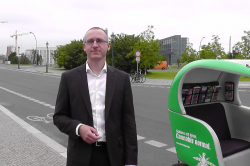
Georg Wurth wanted to go on TV to campaign for cannabis but ended up on the Web and won one million Euros. Thanks, internet!
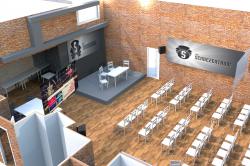
Sendezentrum is back and will again amplify re:publica’s voice through three days of the finest live-podcasting. Check it out, join in and experience podcasting in all its wild glory.

For those of you, who are not all that well versed in designing your own business cards, MOO.com is once again providing 50 (near enough) free cards for re:publica visitors.
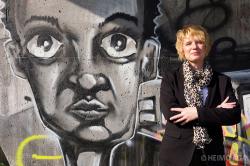
The buzzword Big Data hinges on “algorithms”. According to Yvonne Hofstetter, one of the leading experts in intelligent data analysis, it is vital for our future that we understand them.

Our programme team has been busy planting the programme-forest with session and action saplings. Today, we are putting the preliminary Timetable online.
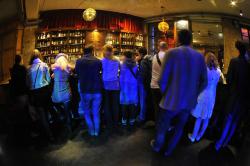
re:publica has always been more than a conference. When 5,000 visitors start making their way into the STATION-Berlin it won't be just for the exciting talks, panels and workshops but also to meet and hangout with nice and interesting people.

At least since the Snowden revelations it has been clear: we live with and in a “surveilled Net”. What that means for us and our future will be debated at our subconference.
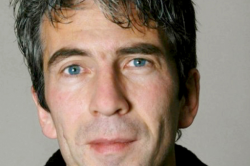
Constantin Seibt is on the hunt for the journalism of the 21st Century. He will give us the latest updates on the continually warring camps of media acceleration vs deceleration and print vs online news.
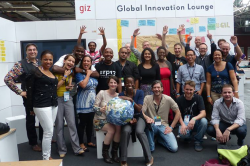
Last year we invited tech community representatives from all over the world to our 'Global Innovation Lounge'. Join us again this year at the 'Global Innovation Gathering'.

It’s on! On 6 May, the eighth re:publica will go INTO THE WILD and will be accompanied by three days of creative entrepreneurship through the startup scene at the STATION-Berlin. Today we are presenting some of the startups, which will be attending.

Hannah Fry is a mathematician. She holds a PhD in fluid-dynamics, has worked in motor sports as an aerodynamicist and now teaches at University College London. Her research focus is on the London riots of 2011.
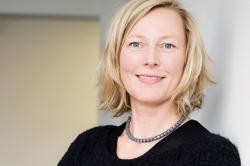
The hallmark of design research is an elegant theory and participative praxis that factors in the person and thereby serves the networked society. But how do we do this and how do we want to communicate and interact with one another in the future?