DE
DE EN
EN
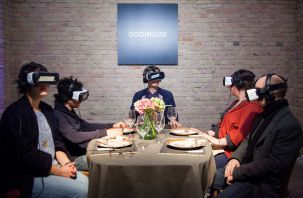
The interplay of immersive arts and media was examined in the "Immersive Arts" programme at re:publica TEN's labore:tory. Speakers presented their experiments and research from the interfaces of performance, theatre, literature, film, internet and technology.
"Immersion" was one of the main buzzwords at the 10th re:publica and refers to diving into an experience and becoming one with your surrounding and situation. Virtual reality and augmented reality are at the forefront of immersive technologies. However, the arts and culture have also been contemplating immersive experiences, especially when it comes to production methods.
Day 2 at labore:tory, the experimentation space for culture production and technology at re:publica, was dedicated to "Immersive Arts" and the search for new possibilities, new forms of work and interpretations of new and innovative technologies.
Andreas Gebhard welcomed the audience together with Julian Kamphausen (Performing Arts Programm Berlin). Julian Kamphausen joined Tina Pfurr (Ballhaus Ost) in guiding the day's event programme – a gesture which highlights the shared interests of digital media and stage performance.
In the day's first talk on how artists and business founders can work together ("Start-up! Wie KünstlerInnen und GründerInnen zusammenarbeiten können"), Thea Dymke (Bundesverband Deutscher Galerien) and Jeanne Charlotte Vogt (NODE Forum for Digital Arts) discussed the need for closer cooperation between the digital creative industry and artists. How can results-orientated work methods join ones where clear results or objectives are not central? The talk highlighted areas where these seemingly opposite poles actually share commonalities and support each other.
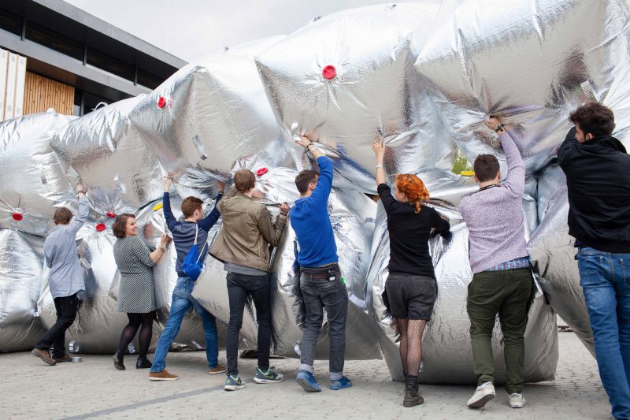
Tools for Action: protest training with "Inflatables"
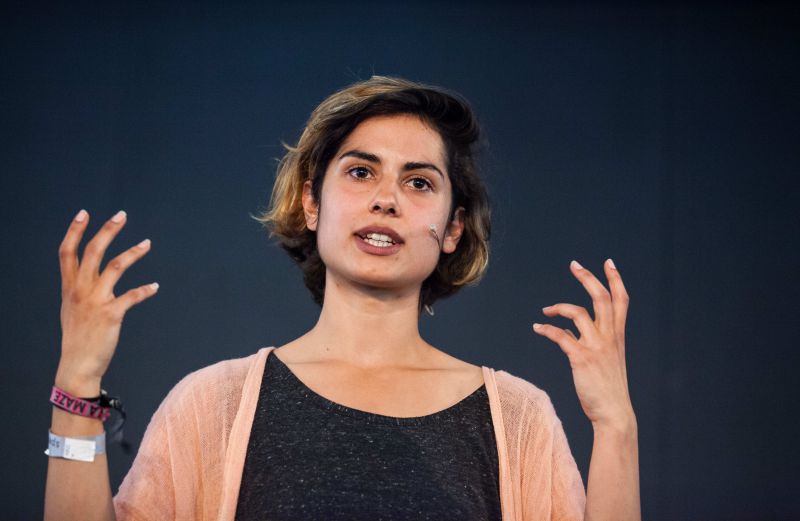
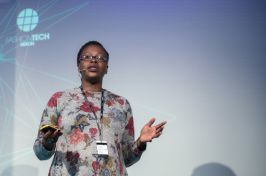
Sara Vogl from the VRNerds
Matthew Vincent and Chance Coughenour use VR but are more focused on the technology's potentials for freedom and emancipation. They presented their "Rekrei" project and how it allows archaeology, art history, political activism and technology to combine into one big effort of civil engagement. "The destruction of cultural heritage by people or nature is nothing new. But our methods and tools for helping and rectifying are." For their project, they collected private recordings of destroyed cultural artefacts, which were either destroyed by ISIS or destroyed in battles against the group. With help of these images, 3D models are created which can be turned into the blueprints for 3D printing. Chance and Matthew touched on sensitive subjects, such as how art and culture are integral to identity and how new technologies can encourage participation, activism and empowerment.
"Life Behind The Electronic Superhighway – Wie Kunst das Internet verändert" was the title of Marcus Bösch's talk. He opened his talk with the demand that each member of the audience contact their Twitter followers, in order to bring them to the stage, because they were about to witness something on the scale of the first ever Sex Pistols concert. His talk proceeded with a fantastical and colourful roller-coaster trip through the past 10 years of his impressive digital arts productions. These works of art have been largely misunderstood by the usual art institutions, because its combination of aesthetics and digital culture has been hard to place in the usual categories. Bösch's creed: "Space will remain important, whether physical or virtual". Another artists at "Immersive Arts" was Addie Wagenknecht who, together with Jillian York, held a talk on "Nudes and N00dz". Wagenknecht and York explored the questions of "what is art and what is porn?" through examples of classical art works, nude photography and internet art, which have all been censored on social media networks by filters and algorithms.
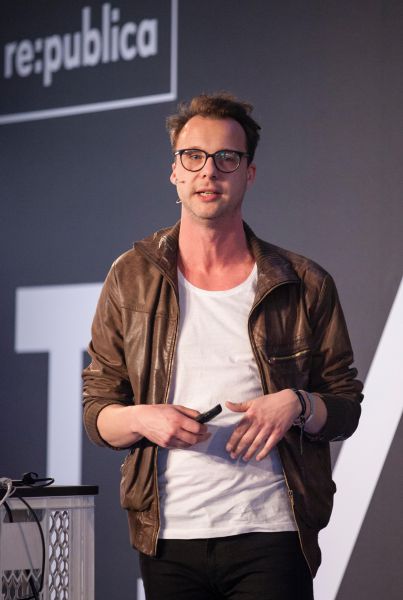
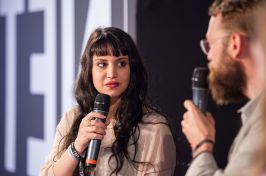
Johan Knatrupp Jensen at the panel "Immerse! new Narratives, new Technologies"
This question was also of interest to Björn Lengers. His message is "VR requires theatre", but can that also work in the reverse? Lengers and his partners have created the “RäuVR” project. It adapted the classic Friedrich Schiller thesis to VR and states that VR can only be realistic if it is also interactive. Actor on stage require audience feedback, which currently does not exists with the usual VR glasses. Lengers described the exciting productions the project has initiated and talked about their attempt to realise their thesis and their struggle with the limitations of current technologies.
Israeli artist Maya Magnat began her talk "Digital Performance – Interfacing Intimacy" by thinking about “digital intimacy” and Sherry Turkle's book "Alone Together". She hit on similar topic, picked up by other sessions, when talking about closeness through technology. For Magnat, the wish for intimacy goes beyond our usual understanding of the term when we apply it to users and their relationships with digital devices. She put the paradoxical relationship between digitisation and intimacy central to her artistic work and explores the concept of closeness in her digital performance "Do you want to put your hand into my hard drive?"
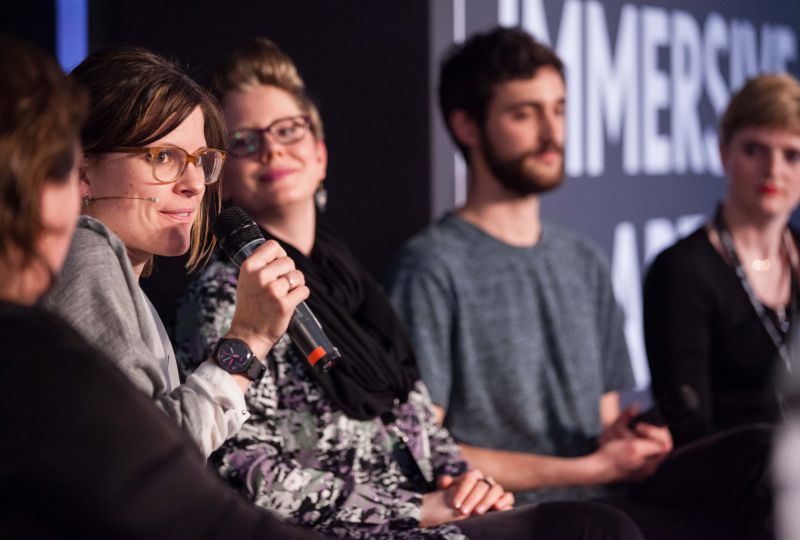
Clarissa Hoehener, Carolin Clausitzer, Alexander Govoni & Carla Streckwall
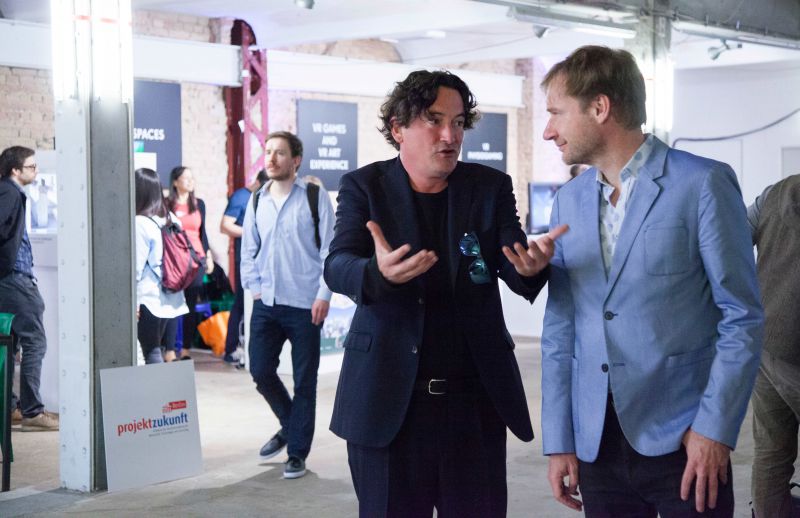
Andreas Gebhard and Tim Renner are visiting the VR exhibition at the labore:tory on the "Immersive Arts" day.
"Closeness", "intimacy" and "experiencing together" were the keywords that brought together various interpretations, scepticism and plain curiosity of VR. As seen during the Musicday, augmented and mixed reality seemed to be the most interesting of mediums for future work and experimentation. By the end of the day, many answers had been found and huge amounts of new questions had been brought up. They all represent new areas where technology and art can come closer together. "Immersive Arts" at re:publica TEN was a day for future synergies. We look forward to following its progress.
Photo credit: re:publica/Jan Michalko (CC BY 2.0)